A Beginner's Guide to Morning Pages for Busy People
The alarm goes off at 6:40. By 7:15 there is a lunchbox to pack, a shirt to iron and a bus to catch. Somewhere in the middle of all that, the advice to fill three pages before breakfast can sound like a joke. Morning pages, the practice popularised by Julia Cameron in The Artist's Way, ask for precisely that: three sides of longhand, written before the day begins, for nobody's eyes but your own. It is a good idea. It is also, on a wet Tuesday in February, an unrealistic one.
The version below keeps the part that does the work and shrinks everything else. Ten minutes, one page, no guilt.
What morning pages actually are
The instruction is specific. Three pages of A4, handwritten, first thing in the morning, stream of consciousness. No planning, no editing, no attempt to make it interesting. If nothing comes, you write that nothing is coming. If what arrives is dull, you write the dull thing down.
The point is not the writing. The point is to move the contents of a crowded head onto paper so the day can start with a little more room in it.
It helps to be clear about what they are not. They are not a diary, which records what happened. They are not a journal, kept carefully and reread fondly. They are not a draft of anything you intend to publish. Think of them as emptying your pockets onto the hall table: a receipt, a bent paperclip, a note you forgot to send. Nothing precious, everything useful.
Why the practice is worth protecting
Three things tend to happen when people write this way for a few weeks.
You catch the loop. Most of us spend the early morning rehearsing the same handful of worries in slightly different words. Writing them down repeats them once, properly, and then stops. A worry on paper is easier to look at than a worry in the shower.
You separate thinking from doing. A great many tasks feel urgent only because they are unrecorded. Putting them somewhere means you can decide about them later rather than carrying them all morning.
You get one honest page a day. No audience means no performance. That is rare, and it is strangely restful.
None of this requires elegance, insight or a good mood. The bar is simply that the page gets filled.
What to keep and what to cut
The traditional format was designed for someone with a quiet hour. You are allowed to amend it. Keep the rules that make the practice work; drop the ones that only make it feel like homework.
- Keep the handwriting. The slowness is the feature. Typing is faster, but faster is not what you are after here.
- Keep the timing. Before the phone, before email, before the radio. Give the day your own thoughts first.
- Keep the silence rule. Nobody reads it. Not a partner, not a friend, not you, for at least a month.
- Cut the page count. One side of A4 is plenty to begin with.
- Cut the time. Ten minutes with a timer on the table. When it rings, you stop mid-sentence.
- Cut the stationery hunt. Any notebook will do. The search for the right one is often just delay wearing a nice coat.
Four short versions for short mornings
The ten-minute page
One side of A4, timer set, kitchen table. Write until the timer sounds. If you finish early, keep going; if you have not filled the page, that is fine too. Do this five mornings a week and you have a practice.
The three-line version
For mornings when ten minutes is genuinely impossible. Three lines: what is on my mind, what I am avoiding, what actually matters today. It takes ninety seconds and keeps the thread unbroken. Three lines is not a failure. Skipping is what breaks the habit.
The pocket version
Written on a phone, on the train, one thumb. It loses the slowness and therefore some of the benefit, so treat it as a backup for travel days rather than your default. Handwriting is the part worth defending.
The Sunday long version
If you miss the fuller practice, set aside half an hour at the weekend and write the long version then. It will not be first thing in the morning, and it will still help. The habit matters more than the clock.
What to write when nothing comes
Blank-page mornings are normal, especially in the first fortnight. Try one of these openers and keep the pen moving:
- The thing I am avoiding is…
- If today goes well, it will look like…
- I keep having the same argument about…
- Describe the room you are sitting in, in more detail than necessary.
- Write out a conversation you have been rehearsing, in dialogue.
- Copy a sentence from whatever you read last night, then disagree with it.
Use them as keys, not as a routine. The moment the prompts become the structure, you are back to performing rather than emptying.
Common snags, and what to do about them
It turns into a to-do list every day
Occasionally, fine. A page of tasks is still a page. If it happens every morning, add one line at the end: and underneath all that, I am actually thinking about… That line usually gets you somewhere.
You miss three days in a row
Adopt a simple rule: never two mornings in a row. Missing one is life. Missing four is how practices quietly end. The three-line version exists for exactly this situation.
It feels pointless
It nearly always feels pointless in week one. Judge the practice after a fortnight, not after a single morning, and judge it on how the rest of the day goes rather than on what the pages contain.
Someone reads it
Keep it somewhere dull: a drawer, a bag you take to work, the shelf nobody touches. If you are worried about it being found, write anyway and shred the pages at the end of the week. The writing is what does the work, not the archive.
Start smaller than feels satisfying
Tomorrow morning, put a notebook and a pen next to the kettle tonight. Set a timer for ten minutes and fill one side. Do not reread it. Do not show it to anyone. Do not try to make it good.
If you manage that three times in a week, you are doing morning pages. Everything else — the three sides, the early hour, the tidy reflection — can be added later, once the habit has somewhere to stand. Busy people do not need a longer morning. They need a smaller beginning.
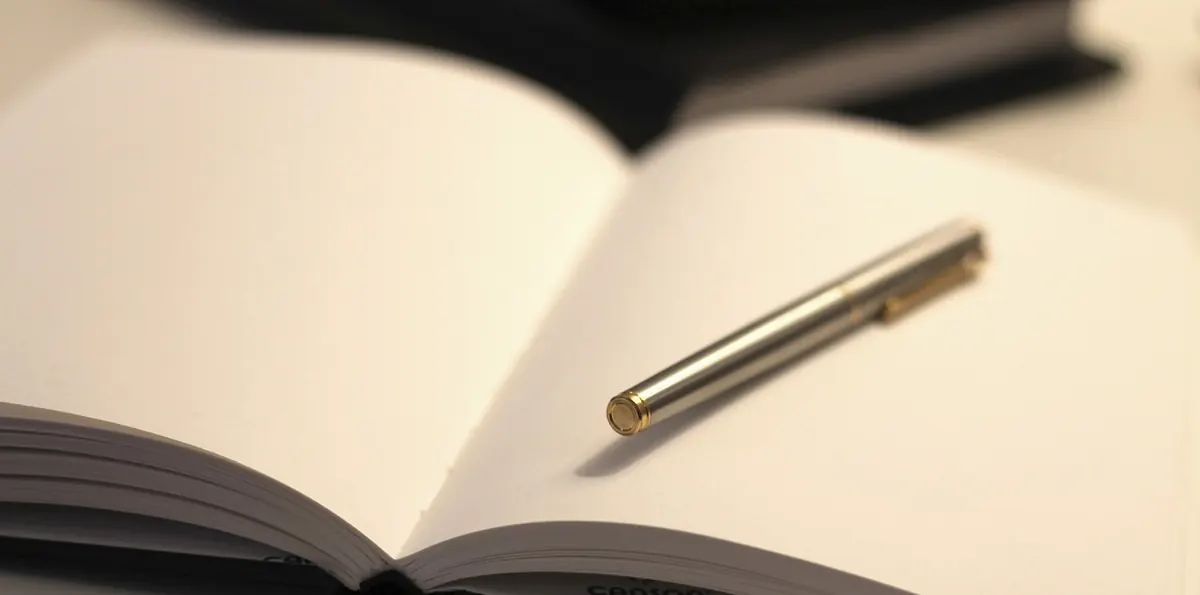
Photo: webvilla / Pixabay


You Might Also Like
Every gambler remembers their first big win. The rush of a 50x multiplier on a slot, the perfect river card in poker, the accumulator that came in on a…
Rain need not spoil a bank holiday. A gentle plan for slow cooking, off-screen hours and one short wet walk — plus permission to do very little.